
Howdy, Marketer!
For decades, the skincare industry built its entire economic engine on a simple, cruel psychological principle: hide your flaws.
If you woke up with a massive breakout, the market offered you flesh-toned concealers, harsh gels that smelled like a swimming pool, or skin-matching hydrocolloid dots. Oof.
Acne is often perceived as a personal failure, something to be sanitized, hidden, and erased before you step out the door.
Then, in 2019, Julie Schott and Brian Bordainick looked at that exact same physical real estate - a bright red pimple in the middle of a teenager's cheek - and asked: what if, instead of hiding it, we made people want to show it off?
They took a cheap, functional medical product and turned acne treatment into a badge of honor.
That led to the creation of Starface. They changed the context without changing the core utility.

Today's Treasure Trove
advertisement
Empanada | Drive B2B Pipeline By Activating Your Team On LinkedIn

Your best hedge against rising LinkedIn CPMs: organic reach
But not how you think…
Instead of putting more ad dollars towards more expensive reach, activate your team by empowering them with organic posts.
I put together a 4-minute video showing exactly how Empanada does this.
No call, no calendar link, just watch: demo walkthrough.
If it looks like something your team could use, hit reply and I'll get you set up.
What is Starface
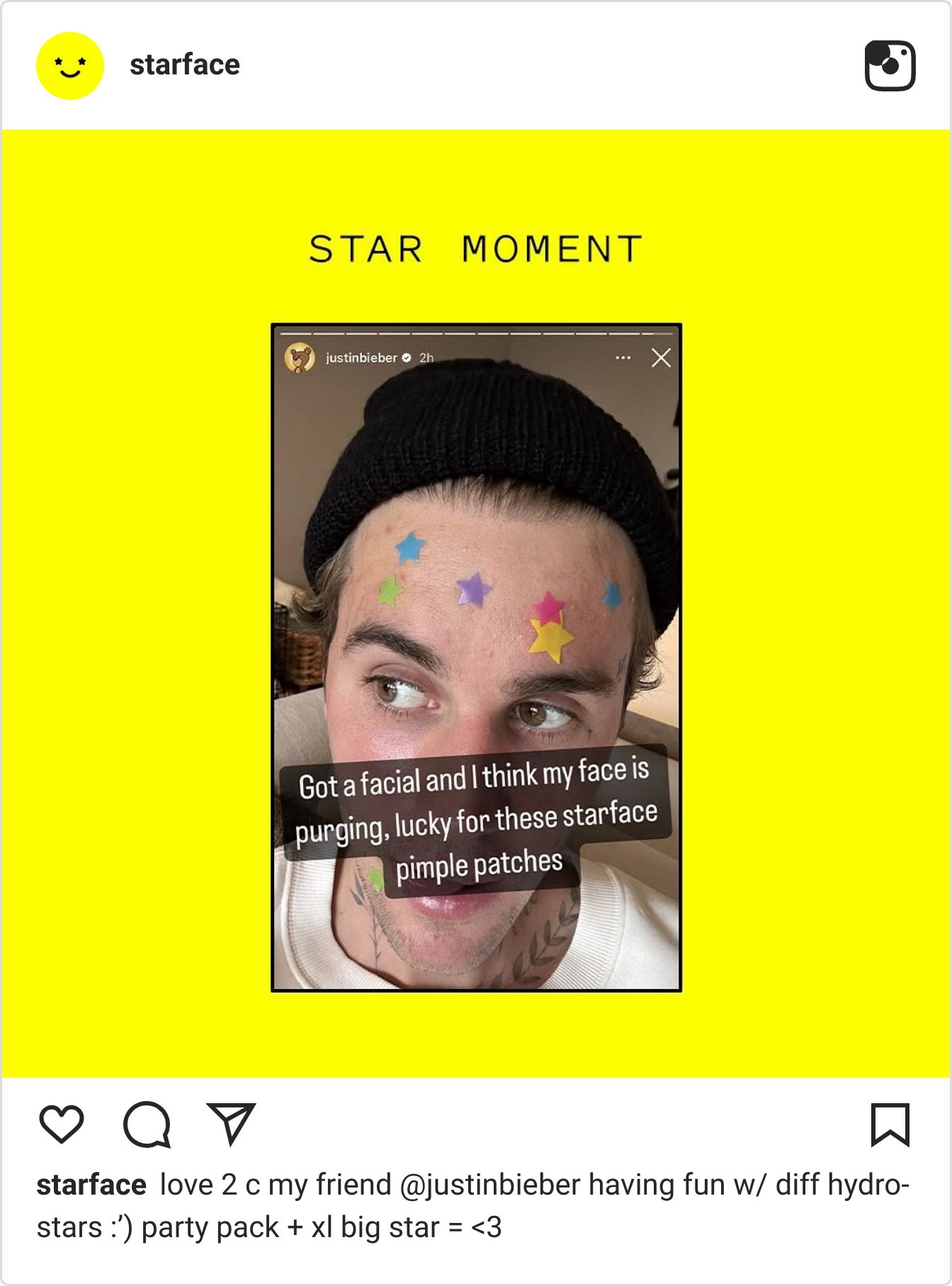
Starface makes star-shaped hydrocolloid pimple patches, the kind you slap on a breakout and wear proudly instead of hiding under makeup.
Starface Target Demographics and Positioning
Starface hits a sweet spot that traditionally drove beauty marketers crazy: late Gen Z and early Gen Alpha consumers, roughly aged 13 to 24. They value authenticity, humor, and self-acceptance over perfection.
The brand’s positioning can be understood in 2 major parts:
1. Identity Over Utility
Teenagers don't want to be told their skin problem is invisible or fixable in three days.
They want permission to not be perfect and still feel cool.
Instead of designing patches to blend in, Starface made them bright, star-shaped, and impossible to miss - flipping the usual hide-your-blemish narrative into something closer to a fashion statement, built around empowerment rather than shame.
People often don't buy wearables for the function; they buy what wearing it signals to everyone else.
2. High-Visibility Visual Ownership
In marketing, if your product usage is invisible, you have to pay for every single impression through ads. But if your product usage is hyper-visible, your customers pay you to become walking billboards.
Starface claimed ownership of bright colours on human faces, which serves as an un-skippable, zero-CAC advertisement.
Starface Marketing Strategy
1. Product Design as Primary Customer Acquisition
Most brands design a product and then figure out how to market it. Starface designed the product specifically so the marketing was inherent to its usage.
According to brand commentary on early product strategy, founder Julie Schott realized that hydrocolloid sheets bought in bulk from medical suppliers could be die-cut into any shape without losing their fluid-absorbing properties.
Choosing a yellow star was deliberate:
The yellow stars remind people of the reward stickers kids get for doing well, turning acne into something positive.
The bright yellow feels playful and cheerful, making acne feel less serious or embarrassing.
Instead of hiding acne, the bright stars make it visible and encourage people to talk about it openly.
The yellow stars are instantly recognizable and give the brand a visual identity that stands out online and on shelves.
Because the product looks fun, users naturally want to share it. The product design systematically solves the top-of-funnel customer acquisition challenge.
2. TikTok-Native Unfiltered Organic Content
Starface was in favor of hyper-casual, creator-led TikTok content.
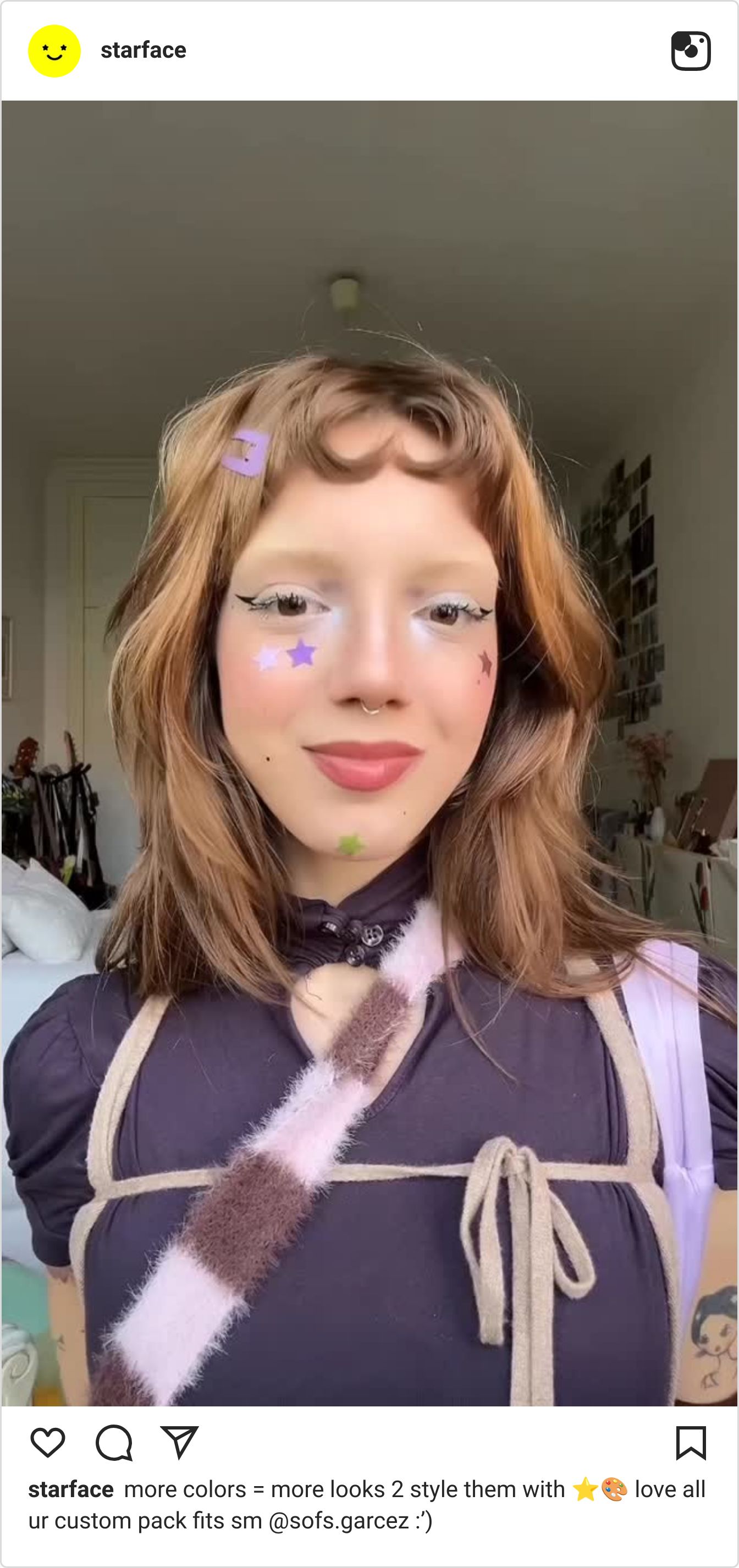
Their content strategy relies on three main pillars:
Casual Normalization: Creators filming routine vlogs while casually wearing Starface patches without addressing them directly. This embeds the product into everyday life as normal attire.
Character Personification: Giving "Big Yellow" (their mascot case) a voice and personality across social channels. The brand speaks like a peer in comment sections, using current internet slang, participating in trending audio formats, and self-referential humor rather than corporate PR speak.

(Source)
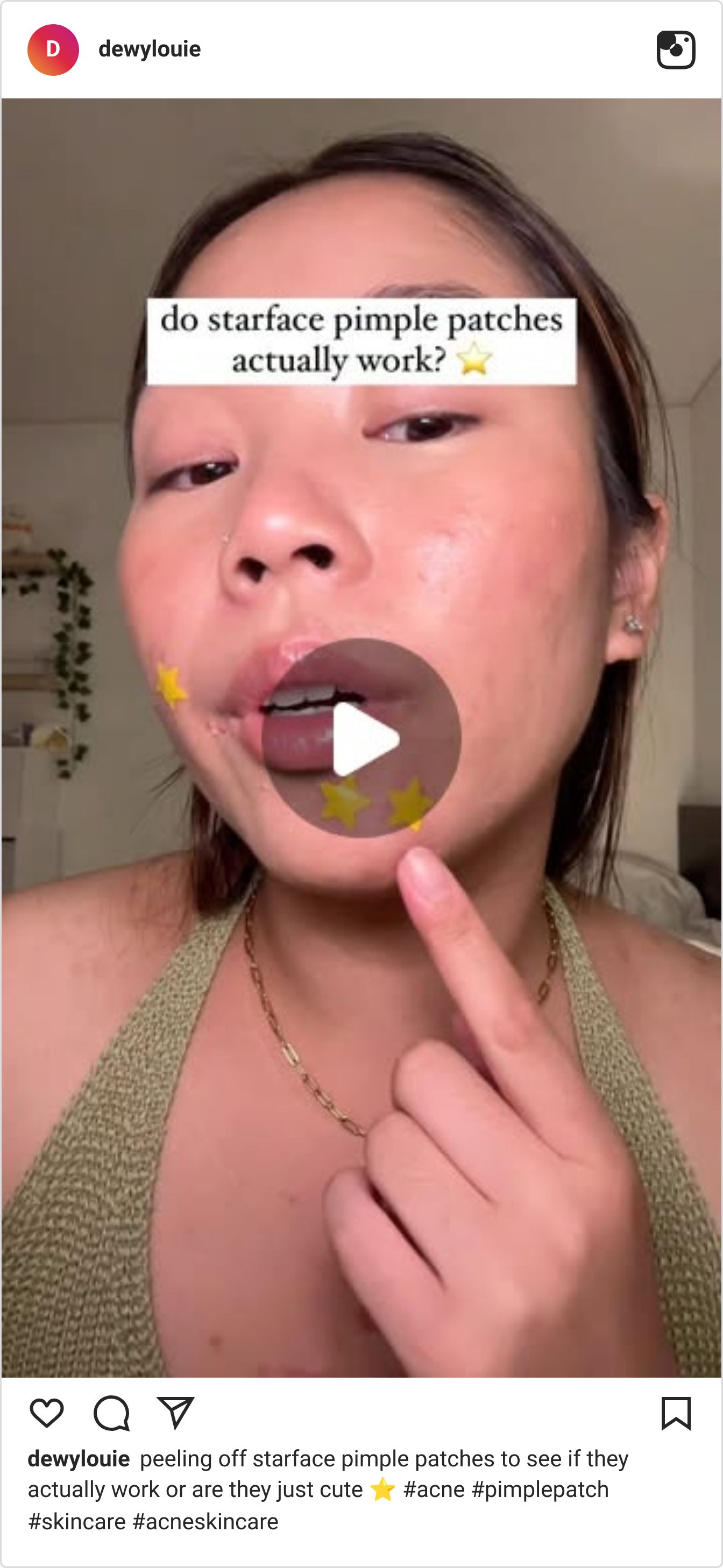
UGC Amplification: Aggressively reposting real customer videos showing the satisfaction of peeling off the patch after it absorbs fluid. It captures the gross-yet-satisfying fascination that drives massive engagement on short-form video platforms.
3. IP Collaborations and Limited-Edition Collectibility
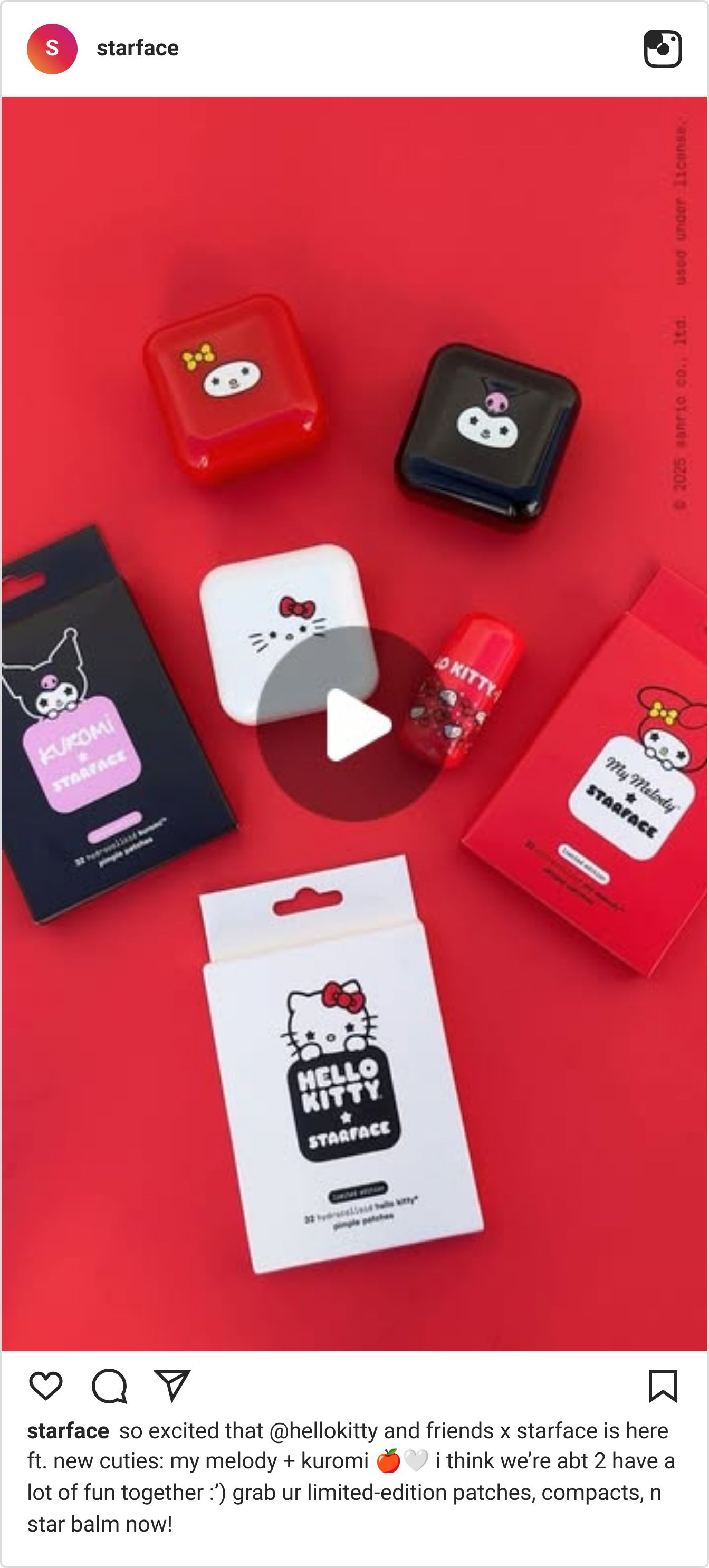
To prevent brand fatigue around the basic yellow star, Starface built a streetwear-inspired drop model using brand partnerships. They brought the hype-beast playbook to skincare.
They partnered with iconic cultural IPs including Sanrio (Hello Kitty, Kuromi, Keroppi), SpongeBob SquarePants, and Sesame Street.
These collaborations serve two strategic purposes:
Re-engagement Hooks: Existing customers who already own the standard yellow stars repurchase the new drop simply to collect the custom compacts and limited-edition patch designs.
Audience Crossover: Tapping into nostalgia-driven fandoms expands their reach into older Gen Z and Millennial audiences who grew up with these characters.
4. Retail Expansion: From DTC Darlings to Everyday Accessibility
While DTC built the brand's cultural relevance, retail drove scale.
Starface systematically expanded into physical retail channels where their core demographic shops daily: Target, Walmart, Sephora, and Ulta.
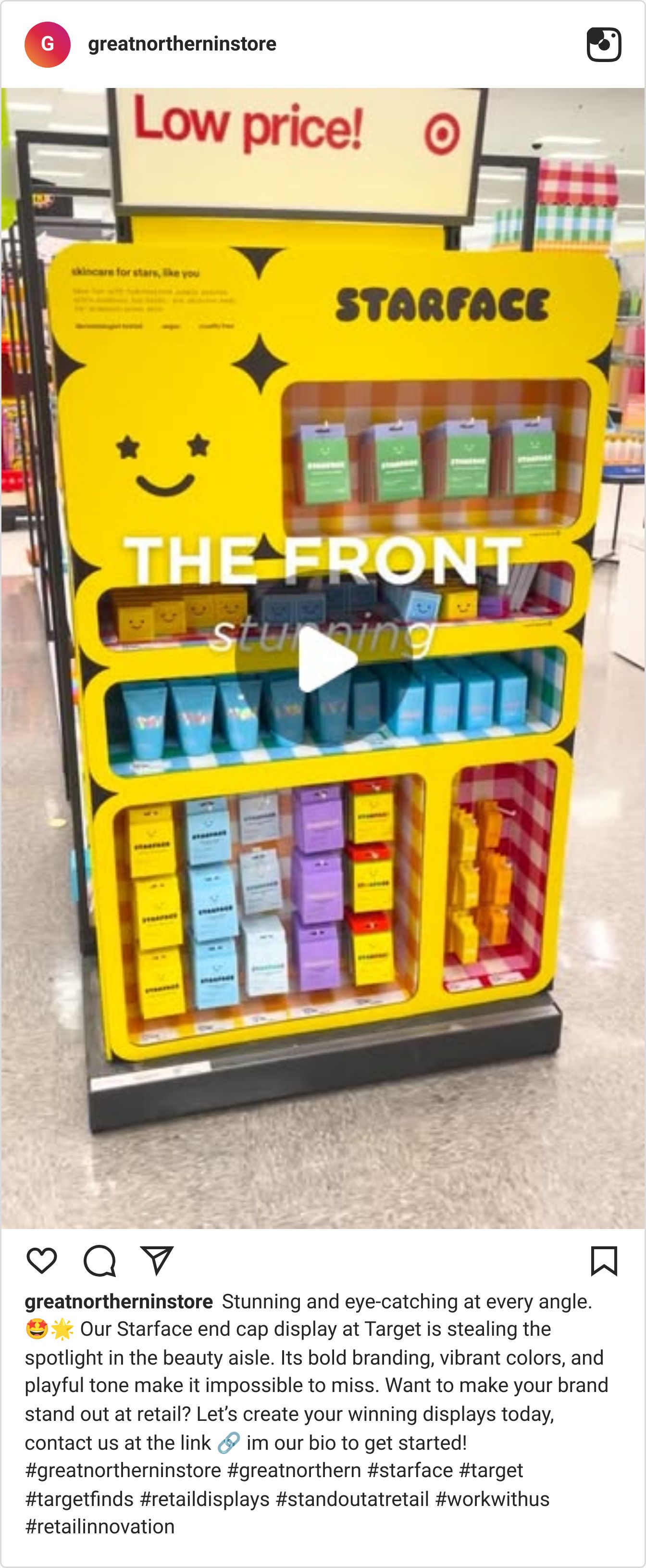
In physical retail environments dominated by clinical whites, blues, and pale pastels, Starface stands out visually, capturing impulse buys at checkout from shoppers who saw the product online.
The Rise of Wearables in Skincare
WGSN predicts that “fun-tility” (fun + utility) products are on the rise.
Starface helped kickstart a broader industry transition toward functional skincare wearables.
For years, skincare was invisible - creams absorb, serums disappear, and clear treatments blend in. But today, consumers actively seek out skincare products that display immediate, visual proof of use.
We see this across several emerging categories:
Under-Eye Patches as Fashion: Brands like Dieux Skin made reusable silicone eye masks an aesthetic statement, with users wearing them on flights, in coffee shops, and during morning routines on camera.
LED Light Therapy Masks: Devices like the Dennis Gross Spectralite or Omnilux turned high-tech treatments into futuristic, wearable status symbols shared across Instagram and TikTok.
Somatic and Micro-Dart Patches: Pimple patch technology expanded into targeted micro-dart delivery systems for deep cystic spots, dark spots, and wrinkles, making localized skin treatment visible and tactile.
Starface proved that consumers are willing to wear their treatments publicly if the design grants them social currency. Skincare moved from a private bathroom activity to a public lifestyle performance.
Campaigns Starface Could Run Next
1. The Night Shift
A campaign focusing on the link between stress, late-night studying/working, and cortisol-induced breakouts.
Starface introduces an expanded overnight recovery line paired with calming, night-routine content.
2. Starface x Athletics
Breakouts among student-athletes and gym-goers are common due to sweat, friction, and gear.
This campaign positions Starface as essential athletic gear. In the locker room, in the gym bag, on the traveling bus, etc. Lace up your sneakers, slip on your jersey, and of course, stick on a Starface patch.
Wrap Up
Starface proves that you don't always need to reinvent the underlying science to disrupt a multi-billion dollar category. Sometimes, you just need to change the narrative frame.
They understood a fundamental truth about modern marketing: when your product turns your customer into a self-expressive advocate, your growth engine runs on real identity, not just ad spend.
As skincare continues to evolve toward functional wearables, the brands that win will design experiences that consumers are proud to wear in public.
✌️,
Tom from Marketer Gems

