
In partnership with

Howdy, marketer!
Heritage brands live on a tightrope.
On one side, you have your core, high-LTV customers who fell in love with your original design identity and will happily buy heavy wool sweaters every fall. On the other side, you have the endless demand for growth, which usually means pulling in younger buyers who consume culture at top speed.
When you try to bridge that gap with a single product play, things get messy fast.
J.Crew found themselves right in the middle of this tension recently when they launched the "Tiny Rollneck" campaign starring Emma Chamberlain. The product stoked instant outrage from legacy customers who flooded social comments demanding the brand "stop the crop".
You can see this divide even in comment sections of posts around this product:
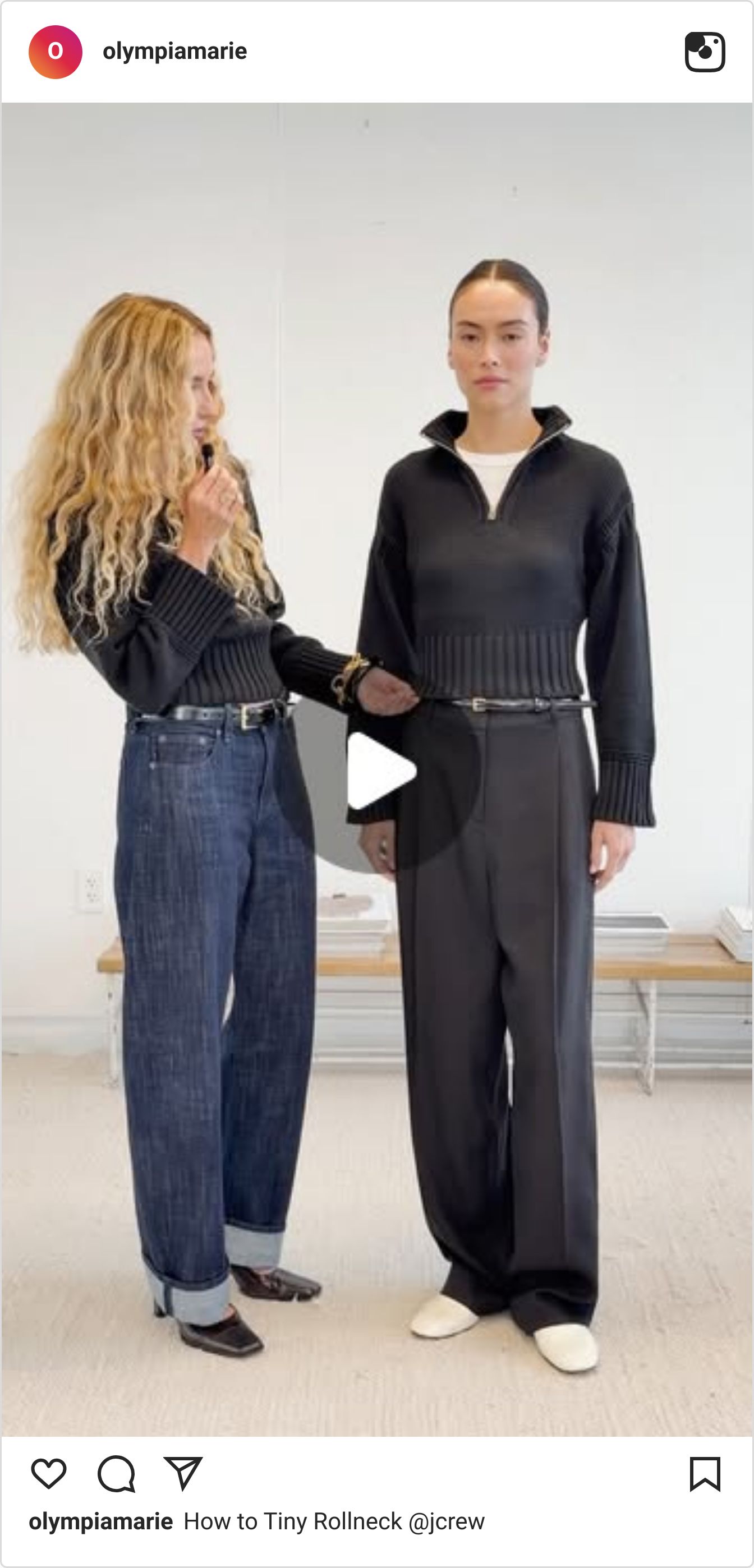
Yet behind the scenes, early sales hit twice the brand’s expectations, and about 20% sales came from new customers.
This dynamic happens when a legacy business tries to experiment with relevance.

Today's Treasure Trove
advertisement
The best in influencer marketing. And you’re invited.

Get ready for Return on Influence Festival '26. An entire day dedicated to influencer marketing with speakers running some of the best programs in the world.
Already booked:
Maya Shaff, ŌURA
Leah Walker, Adobe
Georgia Humphries, Stanley 1913
Tyler Vaught, Edelman
Josh Rangel, Ogilvy
and many more to be announced soon…
It’s free, it’s online, and you’ll take away something you can apply to your job the very next day. Scout’s honor!
What is J.Crew
Instagram: 3M followers
TikTok: 80.1K followers
Facebook: 1.7M followers
YouTube: 19.3K subscribers
Twitter (X): 290.7K followers
LinkedIn: 359K followers
Pinterest: 414.2K followers
J.Crew is an American multi-channel retailer known for its classic, preppy apparel, elevated workwear, and modern casual staples. The brand was founded in 1983 and built its reputation on catalog-driven lifestyle storytelling and accessible quality tailoring.
J.Crew Target Demographics and Positioning
J.Crew's real paying customer is a 32-to-55-year-old professional with disposable income and a memory of the brand from its 90s or Jenna Lyons-era peak. They buy repeatedly, at full price, in multiples.
The brand's stated ambition, though, is to be "ageless."
“It’s not just about one generation. It’s really about connecting and finding that commonality with all.”
Positioning-wise, J.Crew occupies a strange and valuable middle: premium quality at non-premium prices, sitting above Gap and Uniqlo, below Ralph Lauren, and adjacent to Everlane and Quince on price but well above them on cultural cachet.
Its moat is archive - 43 years of catalogs, silhouettes, and references that no DTC challenger can manufacture.
Marketing Strategies of J.Crew
1. The Heritage Revival Framework
J.Crew's strongest growth play over the last three years has been leaning heavily into its own archives. Rather than trying to invent a completely new design language, the team mines classic catalogs from the late '80s and '90s. They bring back iconic SKUs, like the Barn Jacket and the original Rollneck, and market them as archival grails.
This strategy works because it hits both demographics at once.
Older buyers get a hit of genuine nostalgia, while younger buyers see vintage Americana prep as an aspirational, thrifted aesthetic.
The team reinforces this through limited-run vintage drops on their website, where curated, actual 1990s J.Crew pieces are resold directly to fans – a tactic that consistently sells out quickly.
2. High-Friction Creator Partnerships
Instead of running generic influencer gifted campaigns, J.Crew pairs with culture-shaping creators to force attention. The Emma Chamberlain "Tiny Rollneck" partnership is a clear example.
By putting a Gen Z style icon in a cropped version of an archival staple, they deliberately created a product that provoked debate.
Traditional loyalists complained that the cropped silhouette ignored the functional needs of older buyers who want coverage and warmth. Yet from a pure acquisition perspective, the friction was the strategy.
The controversy generated unpaid press, drove high comment volume on Instagram, and strong conversions. The trade-off is brand equity trust: if every iconic product gets altered for a trend, core customers start to feel pushed out.
3. "Third-Place" Retail Experience
While competitors closed stores to pivot purely to digital, J.Crew doubled down on using physical retail as a storytelling vehicle.
In key metros, J.Crew treats flagships as experiential hubs – hosting limited pop‑ups, product‑launch events, and community‑style activations (e.g., NYFW pop‑ups, Bowery sweepstakes) to give high‑LTV customers reasons to visit beyond discounts.
What actually happened with the Tiny Rollneck
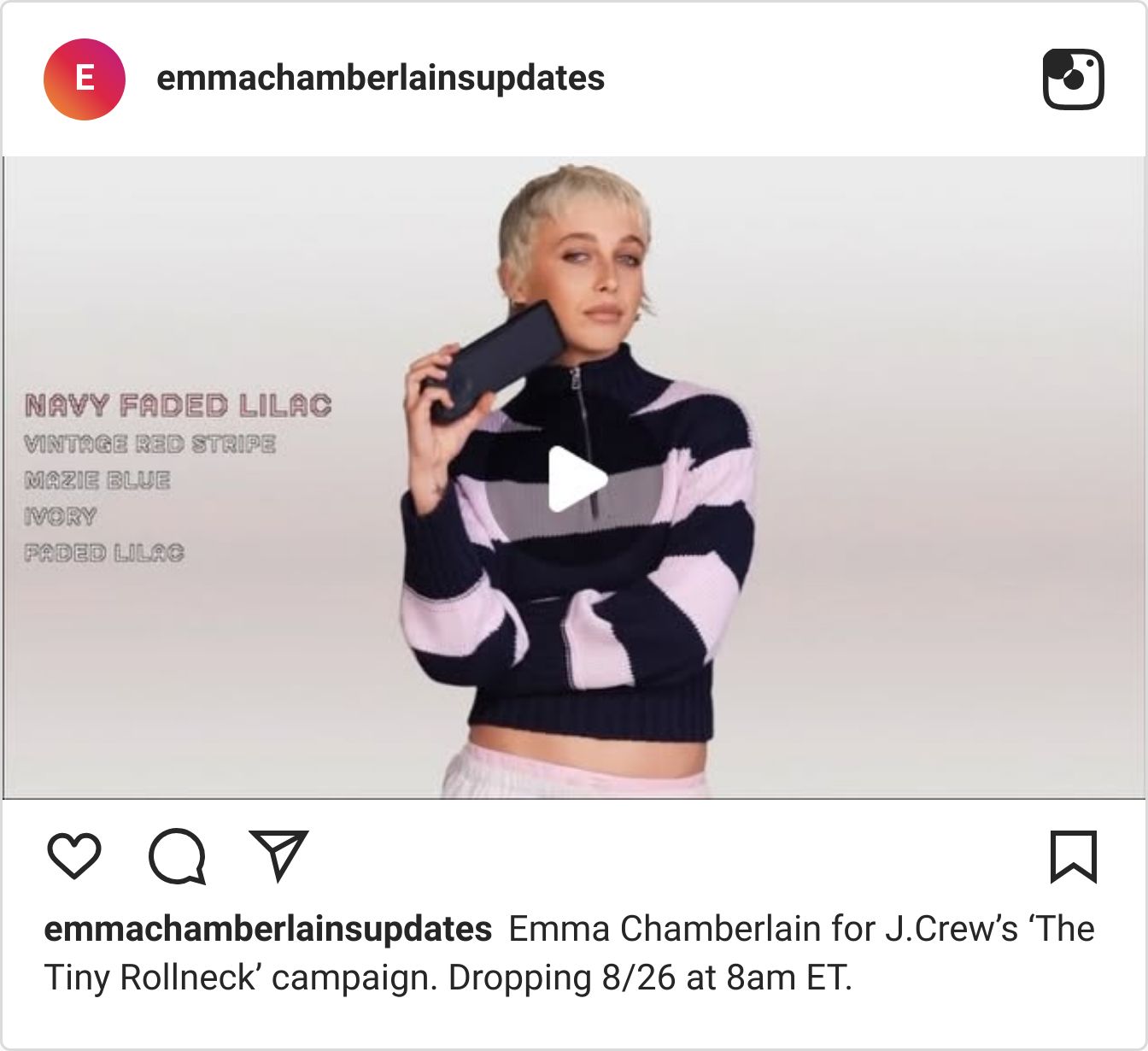
The creative, shot and directed by Ian Markell, placed Chamberlain in a candy-colored world drawing heavily on early-2000s internet and fashion media (Source).
The most useful critique came from Colin Nagy in Why Is This Interesting, who found the Y2K gaming aesthetic disconnected from everything else the brand has going on, and described the campaign as feeling a little thirsty and not well aligned (WITI).
Emily Sundberg criticized the campaign in Feed Me, and the timing - right after the sold‑out vintage drop - made the creative disconnect feel even starker to critics.
J.Crew has said the Tiny Rollneck was its biggest style launch ever, with a materially higher share of first‑time buyers than typical drops.
Paula Bruno made the sharper version of this point in Intuition Intelligence, noting: “the best creator partnerships let brand and creator identities shape one another rather than one disappearing into the other” (Source).
Wrap up
J.Crew's recent friction over the Tiny Rollneck is a sign of a brand that matters enough for people to argue about it.
The real risk for J.Crew is forgetting who pays the bills while chasing viral moments.
If they treat Gen Z experiments as additive collections while keeping the core catalog untouchable in quality and cut, they can run both playbooks at once.
But if they sacrifice core fit to win a news cycle, those high-LTV buyers will walk over to competitors; and getting them back is ten times harder than keeping them happy in the first place.
✌️,
Tom from Marketer Gems

