
Howdy, Marketer!
The standard 30-second commercial, the sleek lifestyle photo shoot, and the polished product launch video are suffering from terminal fatigue.
People do not open social apps to read feature matrices or watch subtle, cinematic brand awareness spots. They open these platforms to be entertained, distracted, or emotionally moved.
People are watching in a completely different shape: the micro-drama.
According to insights published by VML, the global micro-drama market surged past $11 billion.
What started as guilty-pleasure trash TV for smartphones - featuring outrageous titles about secret billionaires, fake marriages, and mafia revenge - has morphed into the most potent content vehicle available to consumer brands and sports organizations.
Marketers are moving past simple product placements and are now scripting full series around their brand identity.

Today's Treasure Trove
advertisement
Empanada | Drive B2B Pipeline By Activating Your Team On LinkedIn

Your best hedge against rising LinkedIn CPMs: organic reach
But not how you think…
Instead of putting more ad dollars towards more expensive reach, activate your team by empowering them with organic posts.
I put together a 4-minute video showing exactly how Empanada does this.
No call, no calendar link, just watch: demo walkthrough.
If it looks like something your team could use, hit reply and I'll get you set up.
What A Micro-Drama Actually Is
A micro-drama is a serialized, vertical video story split into short episodes, usually 1-3 minutes, built for a phone screen and structured around a cliffhanger at the end of every single episode.
It borrows its pacing from thrillers, its release schedule from streaming, and its emotional manipulation from telenovelas - love triangles, secret identities, revenge arcs, rags-to-riches flips.
Every episode ends mid-breath so you tap "next" without thinking about it.
Maybelline, Crocs, Starbucks, and MCoBeauty have all launched their own micro-drama series in the past year, and more are joining every month.
Look at how Bilt did it. Bilt is a real estate fintech company, not exactly a sexy category, and they created a series called "Roomies."
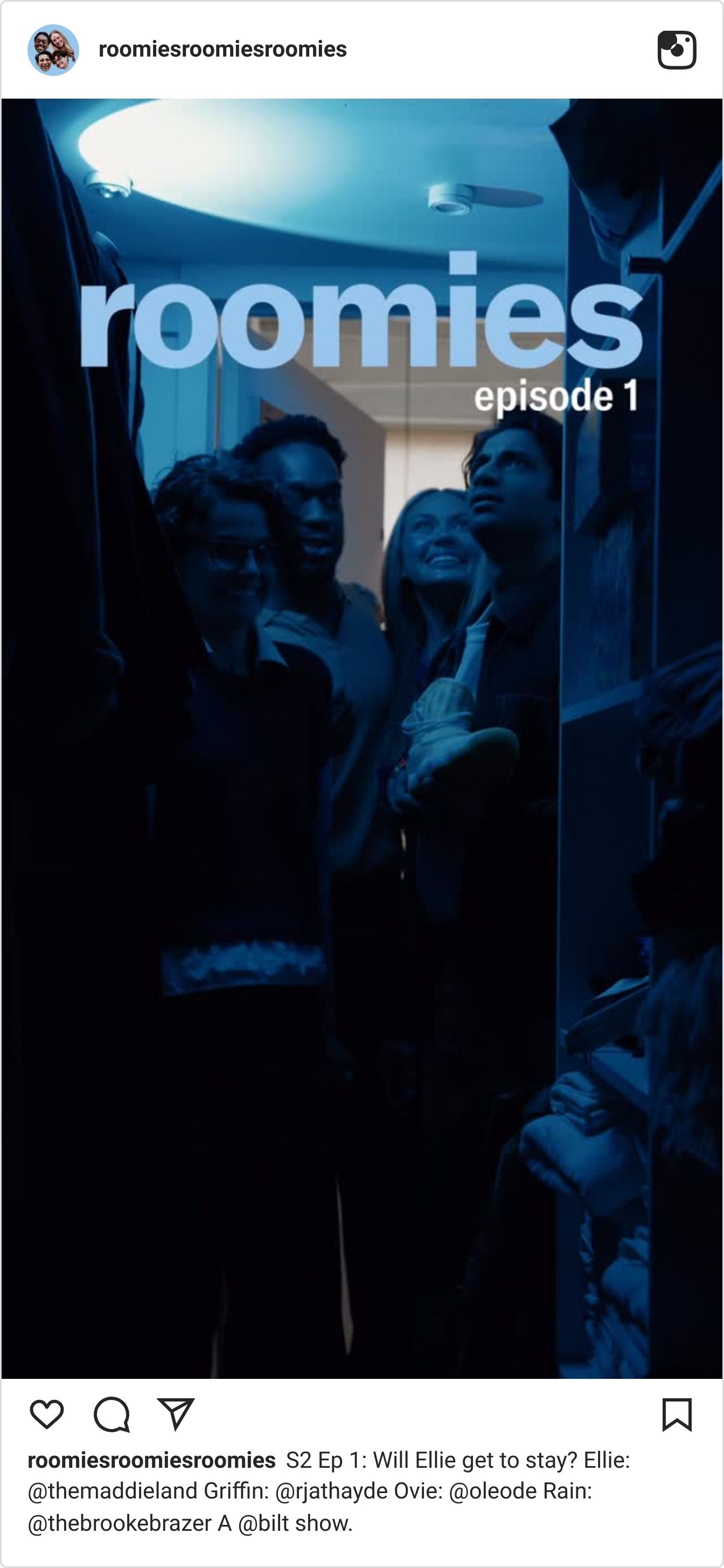
Each episode dealing with rent struggles and lifestyle costs earned as many as half a million views across platforms.
Procter & Gamble took a different but equally deliberate approach with "Rico's Tacos."
The show was built off shopper data first, so the story and the commercial outcome are linked from the start rather than bolted together after the fact. (Source)
And you don't need a P&G budget to pull this off.
A Chevy dealership in upstate New York called Mohawk Chevrolet built a series called "The Dealership" using their own real employees as recurring characters.

Micro-dramas replace product pitching with relationship building, focusing more on emotional connection over product-centric messaging.
Micro-Dramas In Sports Teams
Younger demographics aren't sitting down to watch full 3-hour live broadcasts the way their parents did. They consume sports through bitesized clips, athlete-driven memes, and drama-filled social commentary.
Recognizing this shift, forward-thinking sports organizations and platforms are adopting micro-drama principles to monetize the emotional narratives around the game.
For instance, F1 was a rich man's hobby with a shrinking American audience.
After ‘Drive to Survive’ launched, race viewership on ESPN nearly doubled year over year, and the US became F1's fastest-growing market.

Fans don't just want to see who wins; they want a story, and a story where the same team wins every time gets old fast.
Tennis and golf both launched their own Drive to Survive-style docs, Break Point and Full Swing, but both landed with a lukewarm reaction.
There’s also a useful warning: the format only works when the underlying drama is real enough to sustain scrutiny - manufactured rivalries eventually get called out by the athletes themselves, and that erodes trust fast.
Drivers including Lando Norris and Max Verstappen have publicly criticized the series for “faking rivalries” and splicing audio from different races, and Verstappen has sat out filming for certain seasons over those concerns.
Audiences can tell the difference between a story rooted in something true and a story that’s just wearing drama as a costume.
The Death Of Passive Attention And The Psychology Of "Digital Pickles"
For decades, marketers relied on passive attention.
You bought an ad placement in the middle of a viewer's feed or video stream, interrupted them for 15 seconds, and hoped enough brand equity bled through before they hit "Skip Ad."
But user behavior evolved. Viewers learned to aggressively tune out traditional commercial cues.
Micro-dramas succeed because they bypass this protective friction altogether.
Industry insiders, such as international trade consultant Kathryn Read in her commentary on China's Micro-Drama Market, refer to these vertical episodes as "digital pickles" or "emotional takeout."
They act as rapid-fire emotional messages meant to fill the micro-gaps throughout our day - standing in line for coffee, waiting on a train, or taking a five-minute work break.
The psychology relies heavily on hyper-serialization and open cognitive loops. Traditional brand videos focus on resolution: problem introduced, product applied, happy ending achieved within 30 seconds.
Micro-dramas flip this concept on its head by deliberately withholding resolution.
An episode introduces a massive social conflict or absurd plot twist within the first 3 seconds, escalates the tension rapidly, and cuts out abruptly at the peak of maximum friction. This forces the viewer's brain to demand closure, driving them to scroll straight into the next episode.
The formula is straightforward:
Find the core emotional truth or transformative benefit of your product.
Exaggerate that benefit into an over-the-top narrative plot device.
Embed it seamlessly inside a dramatic storyline where your audience already spends their time.
When a brand builds this engine, they create pull-content where users actively opt in to consume 10, 20, or 30 consecutive minutes of branded media.
How To Launch Your First Branded Micro-Series
If you are ready to move away from standard 30-second video assets and test this format inside your own marketing team, follow this four-step strategic framework:
1. Isolate the Universal Trope
Do not overcomplicate the premise.
Micro-dramas thrive on universally understood archetypes and conflict dynamics: the underdog triumph, the betrayal, the transformation, the secret identity, or the extreme rivalry. Pick a trope that mirrors your customer's underlying aspiration or pain point.
2. Script for the 15-Second Mark
Write your scripts with a pacing mandate: something visually or emotionally shocking must happen every 15 seconds. If a scene consists of two characters having a calm, rational conversation across a table, delete it.
Throw the viewer right into the middle of the argument.
3. Put the Product at the Center of the Solution
Your product should not be a background billboard.
It must be a key plot point.
If you sell finance apps, the app should be the tool that reveals the plot's hidden secrets. If you sell apparel, the wardrobe change should mark the dramatic turning point of the protagonist's status.
4. Optimize for the Infinite Scroll
Never conclude an episode with a passive fade-to-black or a generic call-to-action screen. End on a freeze-frame, a shocking reveal, or an unanswered question right at the second mark, instantly pointing the user to the next clip.
The battle for consumer attention is no longer about who has the biggest production budget or the cleanest brand guidelines. It belongs to the teams willing to drop their corporate filter, embrace pure entertainment mechanics, and keep their audience hanging on every single second.
✌️,
Tom from Marketer Gems

