
Howdy, Marketer!
My wife has been asking me to write about Crocs for months, so this one’s for you, babe!
When I think of Crocs, I’m always reminded of the movie Idiocracy.
The costume designers needed to dress "stupid people in the future."
They wanted clothing that no self-respecting person would be caught dead in.
Guess what shoes the characters wore? Crocs!
Today, Crocs does over $4 billion in annual revenue.
Post Malone has a collaboration. So does Bad Bunny. Justin Bieber. KFC. Balenciaga. And millions of perfectly reasonable people wear them everywhere.
That's the Crocs story - doubling down on exactly what people hated and winning because of it.

Today's Treasure Trove
advertisement
Write funny content in minutes a day.

Every day, you stumble across boring content.
The kind that feels like getting stabbed in the eye. With a plastic fork. Dipped in Absolut Vodka.
The cold, harsh truth? Boring content kills sales.
The good news? You're not boring. You just need better inspiration.
That’s what this free newsletter is for.
Inside, you’ll find some of the funniest, sharpest, most effective writing on the internet.
And every weekday, you'll get one funny example, plus a quick breakdown of exactly why it works.
So, in just a few minutes a day, you'll read, giggle, steal a few ideas and write content that gets more attention. And more sales.
What Is Crocs
Some Stats:
Instagram: 2.7M followers
TikTok: 3.2M followers
Facebook: 8M followers
X (Twitter): 169K followers
Crocs is a footwear brand founded in 2002, originally designed as a boating shoe.
The foam clog became one of the most polarizing products in fashion history - simultaneously mocked and beloved - and has grown into a global lifestyle brand with a rabid fanbase.
Crocs Target Audience
Originally, Crocs was made to be a boating-friendly clog.
But their current cohort - Gen Z and Millennials - made the brand a cultural phenomenon.
Younger consumers wear Crocs precisely because they're ugly.
It's an aesthetic statement.
A rejection of the idea that shoes need to be sleek and inoffensive. This group is vocal, creative, and deeply invested in the brand's identity.
They customize their Crocs with Jibbitz charms. They post their fits online. They will defend their Crocs in comment sections with real passion.
And they are not trying to fit in.
Crocs Marketing Strategies
1. They never tried to fix the ugly
When you have a product that people openly mock, the instinct is to sand down the edges.
Make it slightly more palatable.
Run ads that address the criticism head-on with slick visuals and confident copy.
Crocs leaned in instead.
They've acknowledged that their shoes are not conventionally attractive. And rather than creating distance from that perception, they turned it into a badge of honor.
When you own the insult, no one can use it against you. The moment Crocs decided "ugly" was the point, they took control of the narrative entirely.
2. The collaboration strategy
The way to shift cultural perception is to attach your product to something that already has the image you want.
The Balenciaga collaboration was a major turning point.
Putting a $600+ price tag on a clog reframed the entire conversation. Suddenly Crocs was the ugly shoe that high fashion had co-signed.
The diversity of their partnerships meant Crocs appeared in every corner of culture simultaneously.
Each collaboration also functioned as a limited-drop, which created scarcity and demand.
Furthermore, this strategy completely shifts the brand's pricing power.
While a consumer might hesitate to pay fifty dollars for a standard pair of black clogs at a local retail store, they will happily pay double or triple that price for a limited-edition collaboration that signals their participation in a specific cultural moment.
The brand successfully detached its pricing structure from the physical cost of its raw materials and attached it directly to cultural equity.
Each distinct partnership acts as a targeted acquisition campaign, allowing Crocs to systematically break into isolated consumer subcultures without diluting the core identity of their main product line.
3. Jibbitz and the personalization economy
The brand realized that their foam clog was essentially a blank slate - a minimalist canvas that could be subverted by external creators.
So, Crocs acquired Jibbitz - the charm company - in 2006 for about $10 million. At the time, it probably looked like a small accessory play. In retrospect, it was one of the smartest moves in the brand's history.
Jibbitz turned Crocs from a product into a canvas.
People could customize shoes with charms that represent their favorite shows, sports teams, food, and inside jokes. And people become deeply attached to things they've personalized.
From a marketing perspective, they represent an incredibly elegant solution to the consumer retention problem. When a consumer buys a pair of foam clogs, their purchasing journey with the brand is usually over for the next few years due to the product's durability.
Jibbitz completely solves this long product lifecycle problem by transforming a one-time transactional purchase into an ongoing lifestyle subscription.
4. Community over broadcast
Crocs has built a community of people who actively evangelize the brand.
On social media, there are millions of videos of people showing off their Croc customizations, their Croc collections, their "Croc fits."
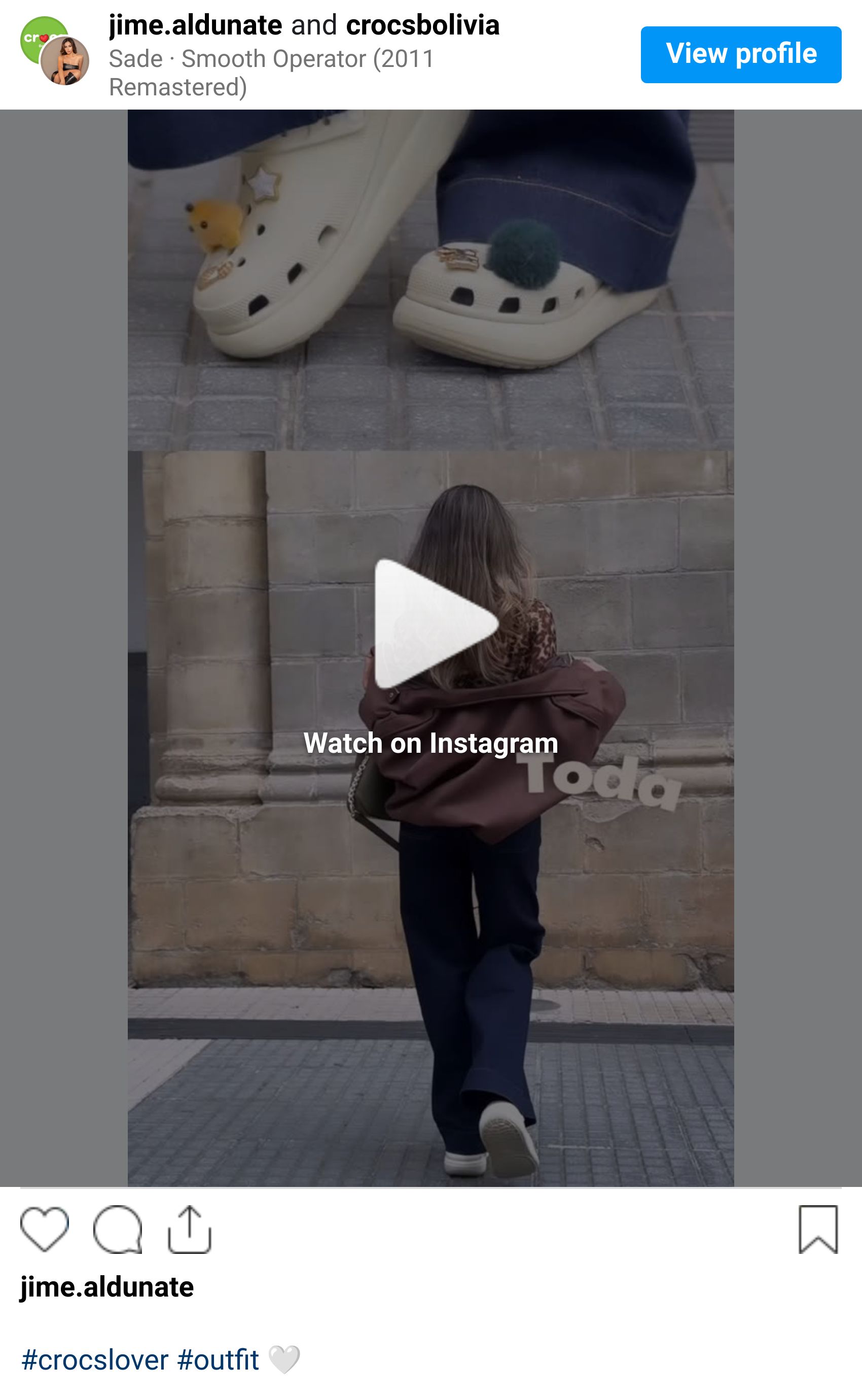
The brand created the conditions for this by building a product people feel ownership over, and then getting out of the way.
Their social media strategy has consistently amplified content relevant for GenZ. The brand understands that authenticity is the product now, not just the shoes.
Wrap Up
At the end of the day, the ultimate lesson from the Crocs playbook is that market consensus is a highly overrated asset.
Crocs built a billion-dollar company by being completely fine with not being liked by everyone.
Instead of changing what critics hated, they celebrated it.
And in a global marketplace crowded with legacy brands desperately trying to look sleek and perfect, the bravest, most profitable thing you can do is have the courage to stay ugly.
✌️,
Tom from Marketer Gems

