
Howdy, marketer!
There comes a point in everyone’s life where they have to ask for their own money back from someone who owes it to them.
Oof. Nothing is more awkward.
Venmo realized that the peer-to-peer transaction wasn’t the point - the interaction was.
By removing the friction of cash and adding the layer of social context, they made interactions with our finances and our friends easier.

Today's Treasure Trove
advertisement
Do you manage Client communications in Slack?

Chronicle helps agencies clean up Slack and stay in control.
See which client channels are active, which channels are going quiet, and where conversations no longer need attention. Reduce noise, spot inactivity, and keep your team focused on the work that matters.
Setup in minutes and bring clarity back to your agency’s Slack!
What’s Venmo?
Some stats:
Venmo, when it launched in 2009, allowed for payments to be made via SMS.
After PayPal’s acquisition, it evolved into a peer-to-peer payment app that lets people send money instantly through their phones.
As the world moved online, Venmo made digital cash transactions seamless.
Venmo’s Target Audience and Positioning
Venmo's core audience is millennials and Gen Z, roughly ages 18-40, though they skew younger.
These are digital natives – people who grew up with smartphones, who think in emojis, and who genuinely don't understand why their parents still write checks.
The sweet spot is urban and suburban young professionals, college students, and anyone who regularly splits costs with friends.
Venmo positioned themselves as the social payment platform with a feed. This social layer turned it from utility into something with personality.

(Source)
It aligns perfectly with how younger generations actually socialize - documenting their lives, staying connected with friends, and signaling what they're up to.
Venmo’s Marketing Strategies
Venmo's marketing genius lives in understanding that they're competing for cultural relevance. Their strategy revolves around embedding themselves so deeply into social behavior that using Venmo becomes automatic.
It replaces the action with the brand - “I’ll Venmo you” instead of “I will split the check with you.” This also contributes to product-led growth of the brand.
In making transactions visible (with privacy controls), Venmo created something no other payment app has - inherent virality. That's every transaction becoming a micro-advertisement.
Allowing emojis helped them build their entire communication culture. People use pizza slices, beer mugs, and inside-joke emojis to describe transactions. Very millennial-coded.
According to this Wired article, ‘An egg frying in a pan sent between two people you suspected of hooking up quickly came to mean "They had breakfast; they're definitely boning."’
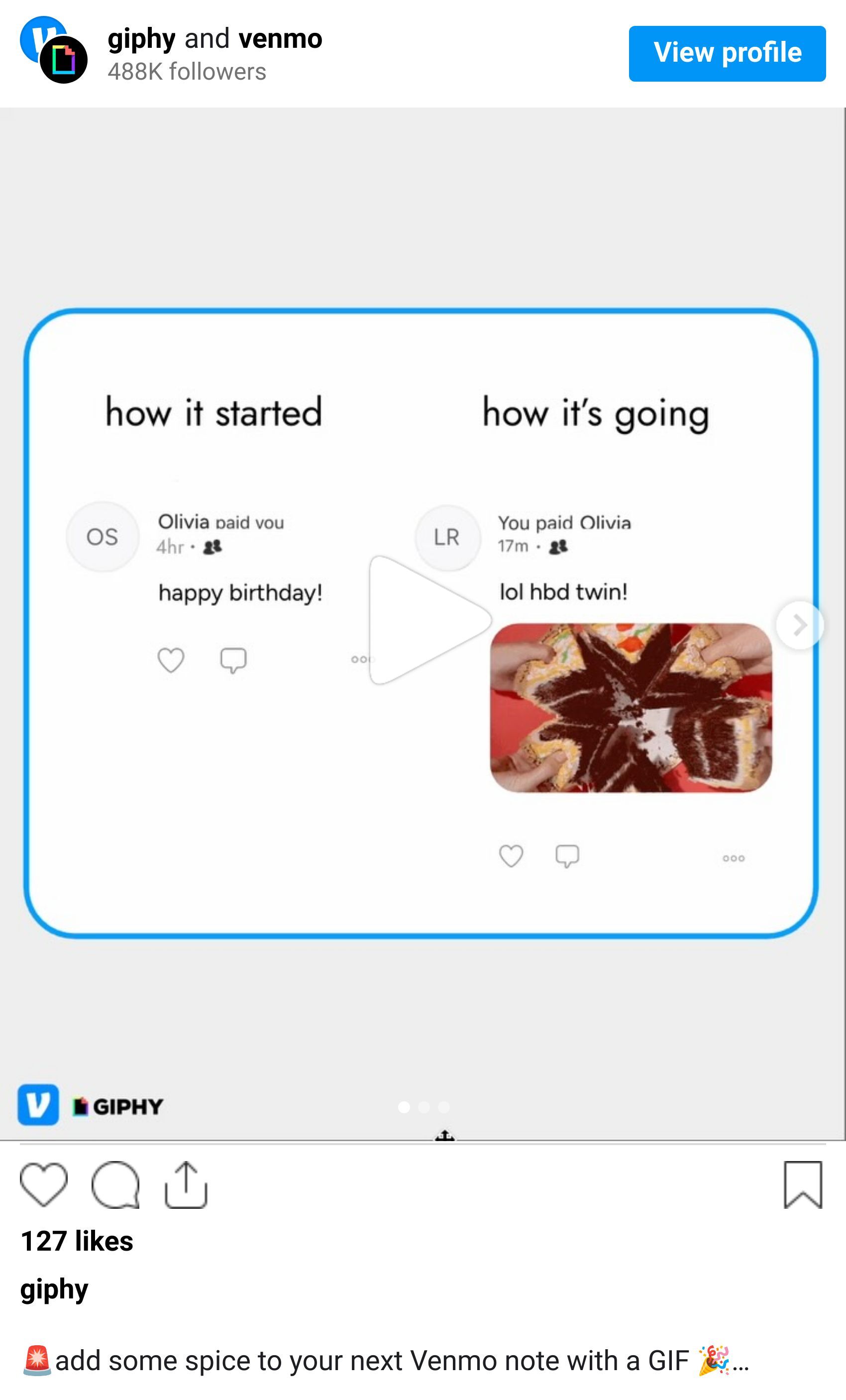
They also partnered with Giphy to make interactions more personalized:
Venmo also nailed college campus marketing early.
Students are constantly splitting costs - textbooks, food delivery, rent, everything. Venmo became the default solution by being present at campus events, offering student promotions, and by being the app everyone's friends already had. These efforts amplified network effects to grow the user base.
They also employed guerilla marketing tactics by employing student brand managers to maintain engagement with the young demographic.
Venmo’s payments are also integrated to millions of merchants now, both online and in-store. This helps to create behavioral consistency. While customers have to pay an additional transaction fee, other features like social feeds, emojis, and quick mobile payments have already built trust through their free P2P model, adding a layer of familiarity and convenience to business payments.
Then came the debit card launch. Its color options offer personalisation. It also signals that Venmo is more than just a P2P money sharing app and positions it as a full financial platform. The tactile layer of a digital app also adds to overall brand experience, word of mouth marketing, and organic discovery.
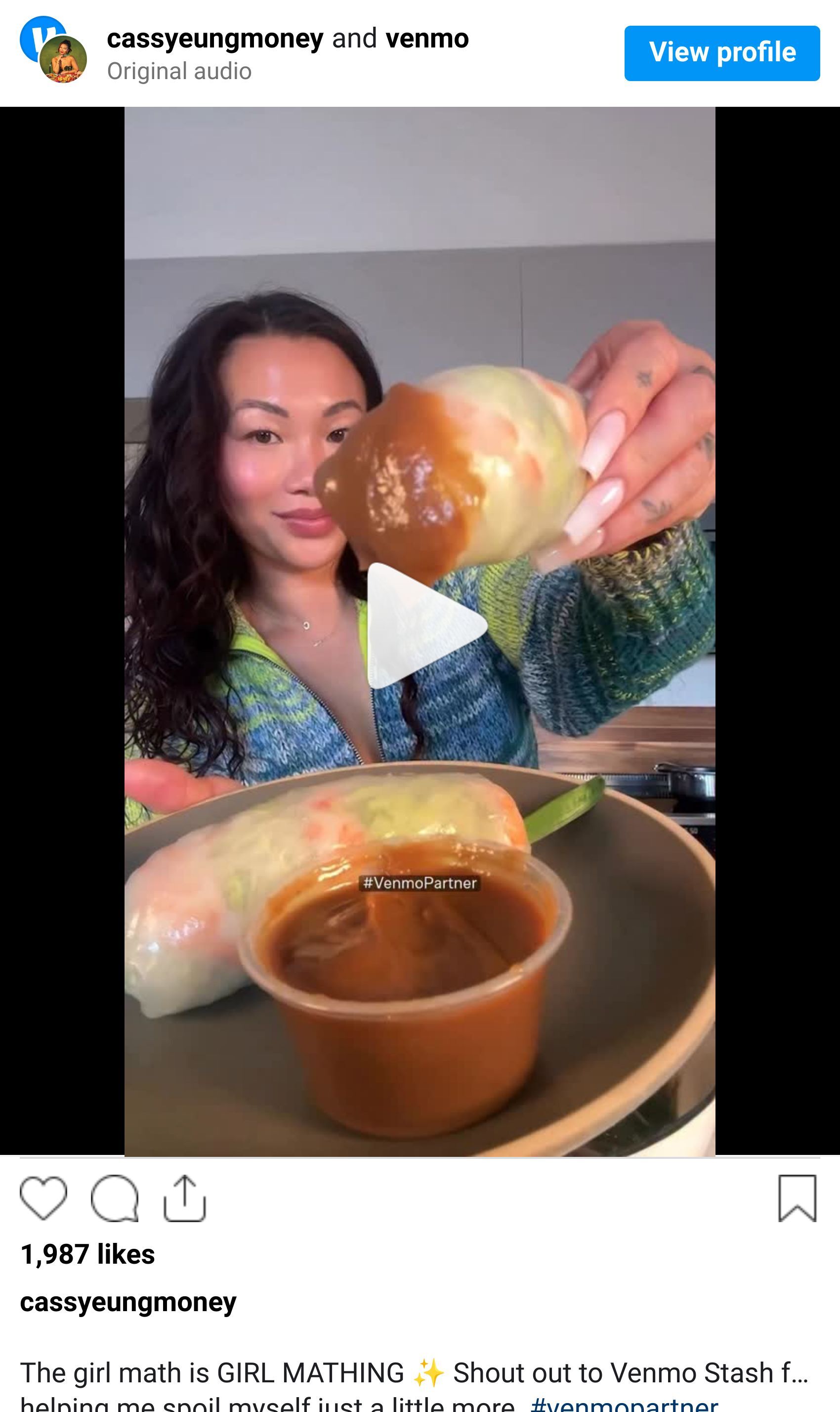
On Instagram, have an influencer marketing campaign where they partner with influencers who declare themselves as #VenmoPartner, highlighting the debit card benefits:
Campaigns Venmo Could Run Next
Venmo has room to push harder into experiences and event-based marketing for major life events - weddings, bachelor parties, group trips. They could partner with wedding planning apps, travel booking sites, and event venues for the same.
With the rise in micro-series on social media, they could launch a financial literacy campaign for Gen Z in the form of non-preachy, maybe humorous, episodes that draw from real-life experiences like:
how to split rent fairly
how to handle that friend who never pays you back
how to budget when you're living on your own for the first time.
They could also partner with financial influencers who actually understand the audience and can talk about money without being boring.
They could lean harder into the merchant side with a "Small Business Social Shopping" campaign. Highlight small businesses that accept Venmo, especially local coffee shops, food trucks, boutiques. Create a discoverable feed of businesses in your area that take Venmo, complete with the current feature of social proof from friends who've shopped there.
This positions Venmo as supporting local businesses.
Wrap Up
Venmo won by understanding something fundamental - money is inherently social, whether we admit it or not. It made daily social dynamics around money exchange visible, trackable, and somehow fun.
The real marketing lesson here is about human behavior. They understood that their actual competition was the social awkwardness of asking friends for money.
Going forward, Venmo's challenge is staying relevant as they expand beyond peer-to-peer payments.
Can they keep that social, friend-focused identity while becoming a broader financial platform? Can they appeal to older demographics without losing their cool factor with younger users?
But if their marketing team keeps focusing on real human behavior instead of just pushing features, I think they'll figure it out.
✌️,
Tom from Marketer Gems [LinkedIn]

