
In partnership with

Howdy, Marketer!
The Cheesecake Factory is probably most known for its massive menu of 250+ items. The portions are comically oversized. It lives in malls. That’s basically it.
And it keeps showing up in Drake lyrics, in Kardashian episodes, in YouTube rabbit holes.
What I came across recently is a bold move they made, which shows they aren't afraid to play the dark arts of modern marketing to stay relevant in a world obsessed with "aesthetic" dining.
We’ll look at that and more about how they became what they are today in this deep dive.

Today's Treasure Trove
advertisement
Meet Performance TV, powered by high-intent Pinterest audiences.

Brands bid on the same potential customers as their competitors and growth is getting pricey.
Reach audiences earlier where they watch the most with Pinterest’s high-intent signals on TV.
If "trust us, your ad is on TV" isn't good enough for you anymore, check this out!
About The Cheesecake Factory
Some stats:
Instagram: 1.1M followers
TikTok: 398K followers
Facebook: 4.6M followers
The Cheesecake Factory is an American casual dining chain that's been around as a restaurant since 1978. They are essentially a full-service restaurant empire disguised as a single iconic chain.
The Cheesecake Factory Target Audience and Positioning:
The restaurant attracts young professionals and families, among others. They usually want a proper sit-down dinner without the formality of a fine dining experience.
And critically, it's a veto-vote buster - meaning when a group can't agree on where to eat, The Cheesecake Factory has something for everyone. They are the ultimate "middle-of-the-road", making luxury feel accessible (and incredibly caloric).
The positioning is essentially: upscale experience, approachable price, overwhelming choice, and a strong occasion appeal. They're not cheap, but they're not pretentious either.

With a moderate average check, they're driving some of the highest unit volumes in the casual dining industry.
Marketing Strategies of The Cheesecake Factory
1. The YouTube "Psyop"
I recently came across this post that claims how The Cheesecake Factory was paying YouTube creators (channels with millions of subscribers) to eat at their restaurants - empty restaurants, food chosen for them, no #ad disclosure - with the comment sections flooded by well-written praise from suspiciously new or inactive accounts.
Clean. Organic-looking. Effective.
This is what's called a dark social play.
It's not new - movie studios and streaming platforms have been doing this for years - but seeing a casual dining chain execute it this cleanly is rare.
The brilliance is in the layers: you get the credibility of a creator with 5+ million subscribers saying the food is great. The video looks authentic because the creator is genuinely reacting to food they didn't pick. The comments section then reinforces social proof for anyone who goes looking.
By the time a viewer is done watching, they've been exposed to multiple layers of "organic" endorsement that all point in one direction.
Whether or not the comment seeding is ethical is a separate conversation. Or even if this is accurate, as I could not find any other sources pointing to this.
But if they did do it, it works because it exploits how we actually trust information. We trust things that feel discovered, not things that feel advertised.
2. PR Machine That Runs Almost for Free
They generated approximately 52 billion media impressions in fiscal 2025 at minimal cost. Read that again. 52 billion impressions. At minimal cost.
How? They show up everywhere culturally without buying their way in.
Last year, they celebrated #NationalCheesecakeMonth, that generated 12.85M impressions. They also have yearly offers (like half-price slices for members) + cause-based campaigns to drive footfall and massive organic buzz without heavy ad spend.
Their unique, oversized menu and dessert focus naturally fit TV and memes, keeping the brand relevant in pop culture. It was also a part of Penny’s job over several seasons of The Big Bang Theory, adding to its cultural clout.
They've built a brand presence that generates its own gravity. People write about them, talk about them, film themselves there. With this, the audience markets the brand for them.
3. Cheesecake Rewards
They launched their Cheesecake Rewards program with the objective to leverage data analytics and insights to engage more effectively with guests and drive incremental sales. On the surface, it looks like a standard loyalty program.
Underneath, it's a data collection engine.
The program runs three types of offers: published offers available to all rewards members, personalized offers tailored to guest behavior and preferences, and marketable offers tied to cultural and brand moments like April Fools' or National Cheesecake Day that drive excitement and broad engagement.
That tiered approach keeps casual users engaged with broad offers while rewarding high-frequency guests with personalized incentives. And the behavioral data feeding into those personalized offers is the real asset being built here.
They now know what you order, when you visit, and how often.
That's powerful for targeting, for menu decisions, and for knowing exactly which customer segment to push during slow periods.
Read more about their rewards programme here with details from the president of The Cheesecake Factory.
The Cheesecake Factory focuses on eye-catching digital content and strong delivery systems. Their social media drives organic reach through short videos of food prep, menu hacks, and user-generated content, making the brand feel fresh and engaging.
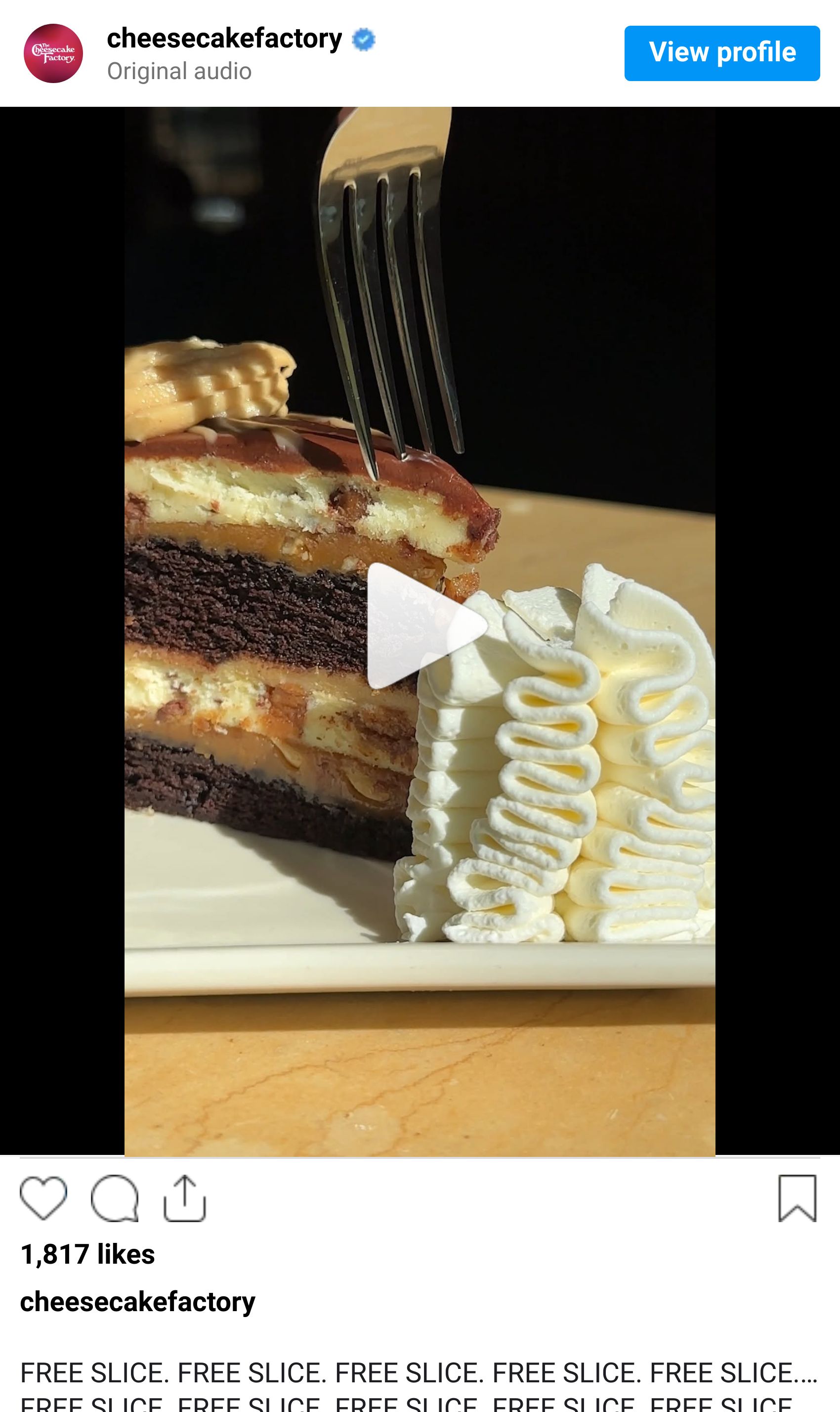
I mean😋😋
5. Micro Brands
The Cheesecake Factory has been able to turn small elements into big brand drivers. Their brown bread has built a cult following online without ads, with people constantly talking about it and recreating it.
At the same time, standout items like the Godiva cheesecake act like mini brands, making the overall experience feel premium and worth the price.
Wrap up
What makes The Cheesecake Factory interesting is that it engineers perception at scale. Every touchpoint, from menus to memes, is designed to feel discovered.
That’s the real takeaway: the future isn’t louder ads, it’s layered experiences that create their own distribution. When your product becomes content, your customers become creators, and your brand becomes culture, you stop competing on spend and start compounding on relevance.
The playbook here is about building a system where marketing is no longer a function, but the outcome.
✌️,
Tom from Marketer Gems

