
Howdy, marketer!
After reading this sentence, I might lose half of y’all’s attention - this deep dive is about a period care brand.
That’s the exact problem that August set out to fix.
One of the most common ways period products have been represented in advertising is sterile and clinical (pharmacies, blue liquid in commercials, nothing that acknowledges this is a human experience).
August came in and said, what if we just... talked about it?
What if the product was beautiful, the brand was conversational, and the people selling it actually looked like the people using it?
That choice - to be direct and unapologetic - is the entire foundation of their marketing. Everything else flows from it. (no pun intended)

Today's Treasure Trove
advertisement
Lift pipeline conversion by up to 118% with Contact-Level ABM

Influ2 analyzed 2M targets and found that when teams run ABM at the contact level, pipeline conversion increases by up to 118%!
But the lift doesn’t come from sending more emails or targeting more accounts.
It comes from catching the first moments of real buyer interest and knowing exactly who’s behind it.
And that’s only possible with contact-level ABM.
Want to see the details?
About August
Some stats:
Instagram: 187K followers
Facebook: 3.3K followers
TikTok: 400K followers
August is a Gen Z-focused period care brand that sells eco-friendly, organic tampons, pads, and liners through a subscription model.
They're essentially selling the idea that your period product shouldn't be something you hide in the bottom of your bag.
Target Demographics and Positioning of August
August's target audience is inclusive, primarily Gen Z people who menstruate aged roughly 16 to 29.
Their audience is socially conscious, value transparency, are comfortable with taboo conversations, and most importantly, are digital-native.
Positioning-wise, August sits in a specific lane: it's more premium than drugstore brands, but it's not trying to be a luxury product.
As periods are still stigmatized, they’re education-first, aiming to normalize conversations.
They're also notably subscription-first, which shapes their entire funnel.
Marketing Strategies of August Period Care Brand
1. Founder-Led Content as Primary Growth Strategy
Nadya Okamoto became the brand voice herself.
She posted high-volume content on TikTok, talked openly about periods, shared the founder's journey, and answered customer questions in real time.
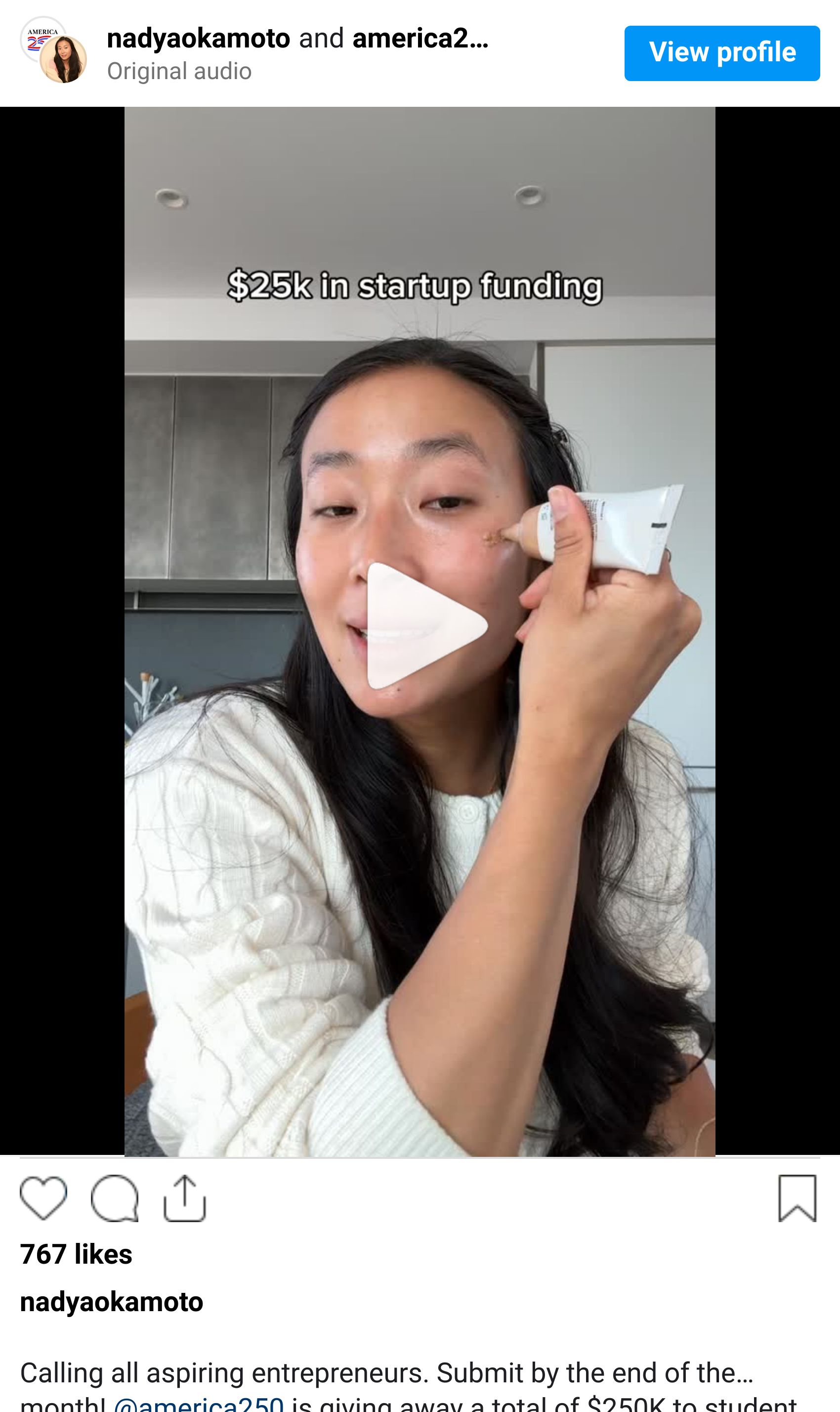
A founder speaking directly to their audience carries a kind of credibility no agency-produced ad can replicate. Awareness, trust, and conversion all was aided through the same channel, which is an extraordinarily efficient way to grow a brand from zero.
2. High-Volume Content Testing Strategy
August treated TikTok like a testing lab: post frequently, try multiple angles, double down on what works, and drop what doesn't.
This is a speed-based strategy, and it gives you a real advantage on algorithm-driven platforms where consistency and volume signal relevance.
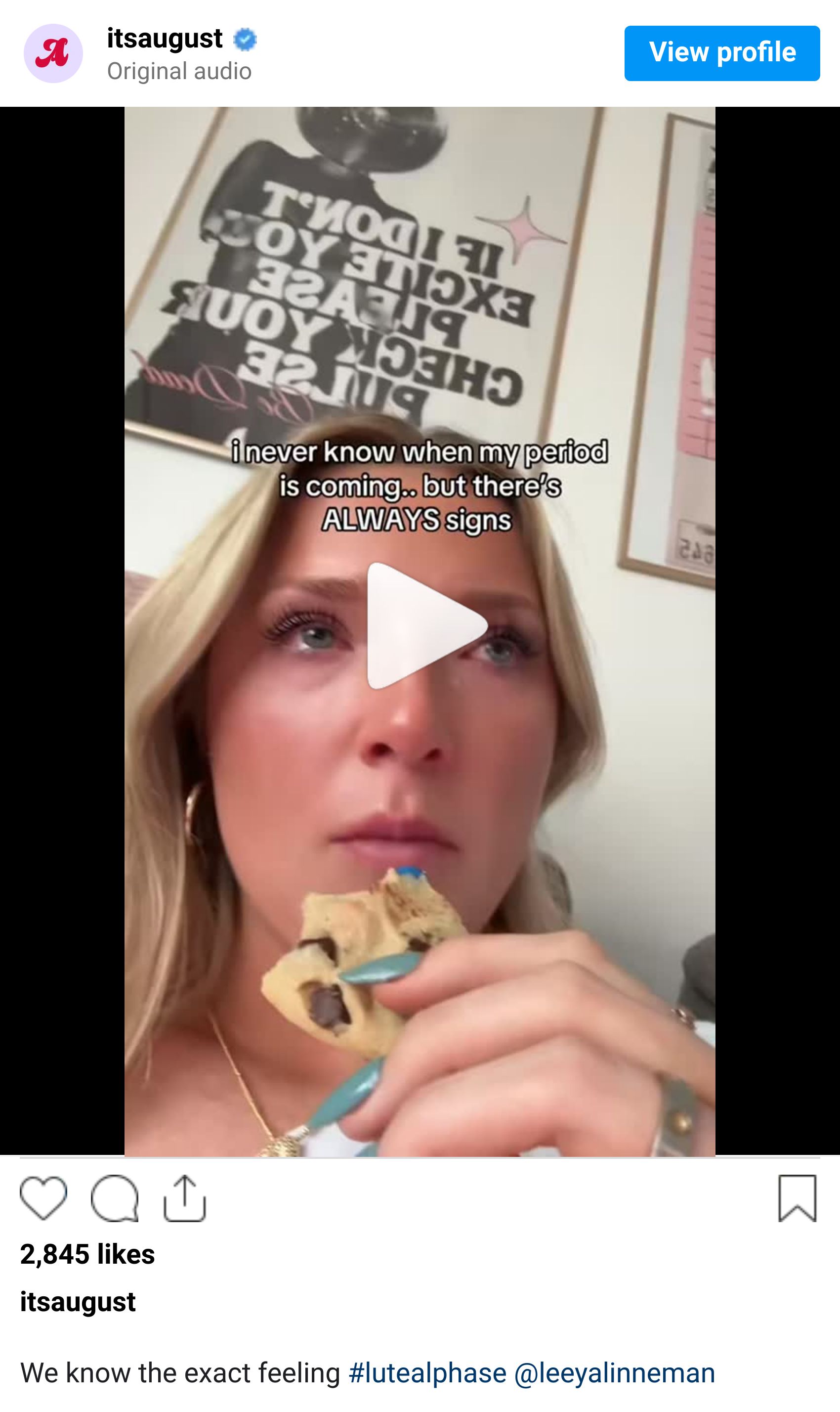
The community-focused and relatability focused content on socials helped them build a loyal audience that wanted to keep coming back.
3. Education-First Content Strategy
Because periods are still stigmatized in a lot of contexts, August made education their top-of-funnel strategy rather than product promotion.
Content around period myths, ingredient transparency, real experiences, and stigma-breaking conversations pulled in organic audiences.
Education builds trust before a purchase decision is ever made, which is especially valuable in a category where consumers have real hesitation and real questions. By the time someone is ready to buy, August has already done the work of becoming the most credible voice in the room.
4. August Advocates Program
The August Advocates Program places August period care products in school and university bathrooms by training students to champion the brand on campus - turning mission-driven advocacy into a direct, low-cost distribution channel.
What makes it strategically interesting is that it works on three levels simultaneously:
it's a low-cost distribution channel
a period-equity proof point that gives the brand real-world credibility
and a Gen Z acquisition engine that reaches students at the exact moment they're forming brand habits
5. TikTok Live Commerce Strategy
August used TikTok Lives for product demos and real-time Q&A. Live video creates the kind of low-pressure intimacy where those questions actually get asked and answered, and that interaction removes the hesitation that often kills conversion.
In categories where trust is the primary barrier to purchase, live commerce is a trust-building mechanism.
6. Organic-First, Paid-Second Strategy
August used organic content to build demand and paid ads to convert it - not the other way around. Paid ads dropped into a cold audience in a stigmatized category tend to underperform.
But when someone has already seen five TikToks from the brand and the founder, read about the ingredients, and followed the brand, a retargeting ad on Instagram becomes a gentle nudge rather than a cold pitch.
Organic does the relationship-building; paid handles the closing.
7. Transparency-Driven Marketing
August openly shared ingredients, pricing rationale, and brand mission in a category where usually companies say as little as possible.
Transparency works as a marketing strategy because it shifts the dynamic from brand-to-consumer broadcasting to something closer to a two-way conversation.
8. Partnership-Led Marketing
August partnered with DoorDash, USA Track & Field, and WeWork - a deliberately varied set of collaborators that expanded reach across different contexts and audiences.
Partnerships like these place the brand inside moments and environments where people are already engaged.
Each partnership extends the brand narrative into a new context without requiring the brand to start a new conversation from scratch.
Wrap Up
August is proof that the DTC playbook just needs to be executed with real specificity.
They picked a generation, picked a tone, picked a community model, and built consistently toward it.
People trust people - and if you make the right people actual believers, you don't necessarily need to depend on ads.
✌️,
Tom from Marketer Gems

